Most "fashion sales" online aren't sales. A 30% markdown on a dress that was quietly listed at double its usual price two weeks ago isn't a deal, it's a label. The question that actually matters isn't "is this on sale?" It's "is this genuinely half the normal price?"
Set the bar there and almost every source drops out. Retail stores go that deep only in short clearance windows. Brand sites almost never do. This guide covers the channels that consistently clear 50% on real clothing, what's live in our own inventory right now, and the checks that matter specifically for fashion, not electronics or general merchandise.
Key Takeaways
7,807 clothing listings are live on Half or Nothing right now at 50% off or more, averaging 71.4% off.
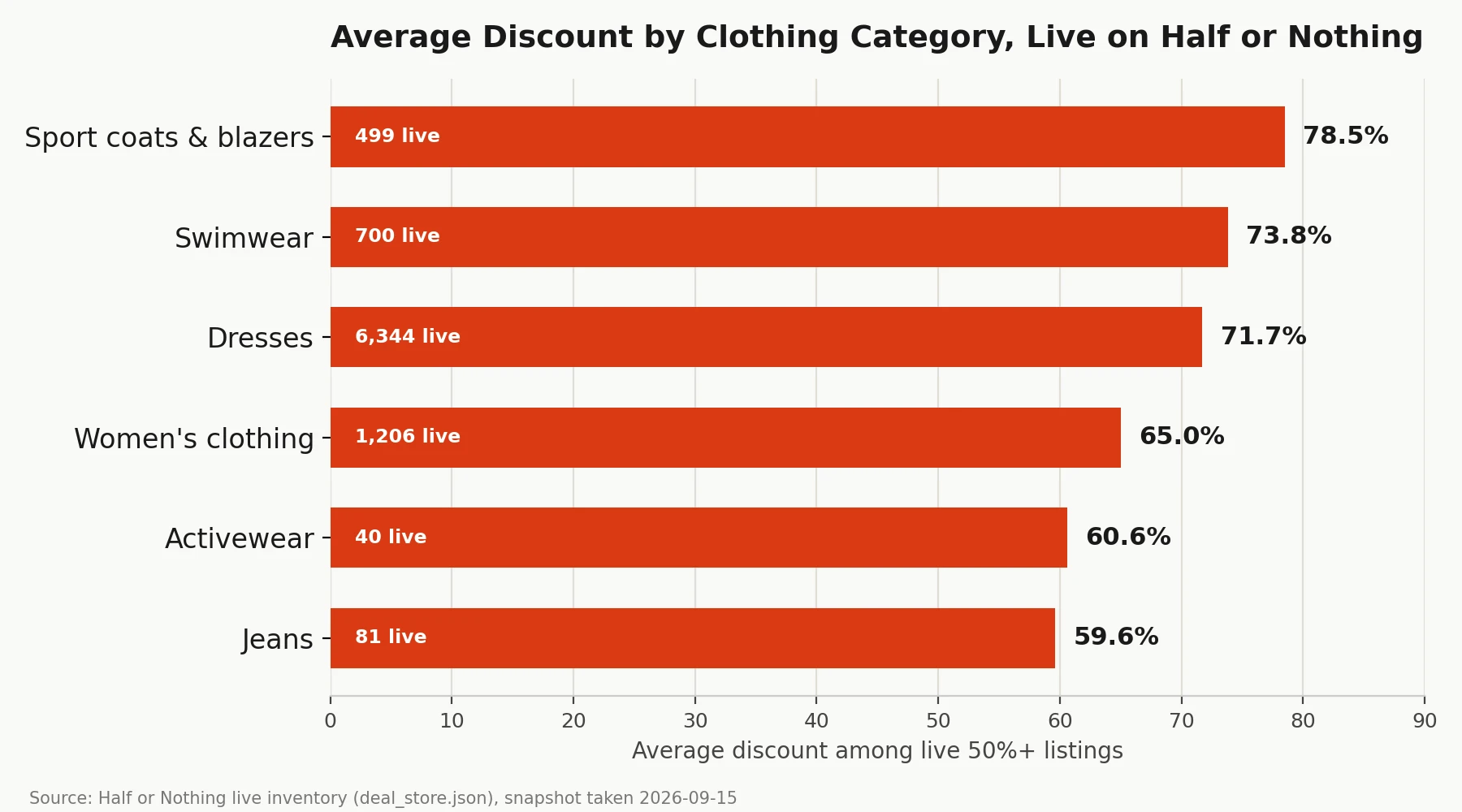
Sport coats and blazers run the deepest average discount (78.5%), dresses have the most volume (6,344 live listings), and jeans run the shallowest (59.6%), because denim rarely carries an inflated anchor price to begin with.
eBay's individual sellers, not retail marketing teams, set these prices, which is why the discounts hold up.
"NWT" (New With Tags) is the single most useful signal in fashion resale: it means the item was never worn, still carries the original retail tag, and the seller has no return-fraud history to hide.
Sizing, not authenticity, is the real risk in clothing resale. Check the brand's actual size chart, not the tag number, before buying.
Which Channels Actually Produce 50%+ Clothing Discounts
Individual eBay Sellers
Clothing resale on eBay comes from people and small liquidators clearing closets, estate sales, and overstock pallets, not from a retailer trying to look generous. A seller who paid $40 for a jacket and lists it at $18 isn't running a promotion. They want it gone. That's why eBay produces real 50%, 60%, even 90% off clothing at volume, while brand sites almost never do.
Retail Clearance, With One Catch
Real end-of-season clearance exists, and it's genuine when a retailer needs floor space for the next season's stock. The catch is the "original price" printed on the tag. Harvard Business School research found that for every $1 increase in a posted "original price," shoppers were willing to pay an average of 77 cents more, which is exactly why some outlet and clearance tags carry a number the item was never actually sold at. A real clearance discount off a real price is honest. A discount off an invented anchor isn't, even if the item is genuinely cheap.
Outlet and "Made for Outlet" Stock
This one is specific to apparel. Consumers' Checkbook's 2026 investigation found that 80 to 85 percent of the goods sold at outlet and factory stores were manufactured specifically for those off-price locations, not leftover stock from regular retail, according to marketing professor Gonca Soysal. Those items get tagged with a fictitious "original retail" price that was never charged anywhere, since the item never existed at full price to begin with. The discount looks real. The anchor isn't. This trick barely exists in electronics or home goods; it's largely a clothing and footwear phenomenon.
The practical takeaway: for clothing specifically, eBay's individual-seller listings are the most consistently honest 50%+ source, because the person setting the price has no marketing incentive to inflate what came before it.
What's Actually Live Right Now
Category
Live deals at 50%+
Average discount
Sport coats & blazers
499
78.5%
Swimwear
700
73.8%
Dresses
6,344
71.7%
Women's clothing (general)
1,206
65.0%
Activewear
40
60.6%
Jeans
81
59.6%
Dresses carry the most volume by a wide margin, which tracks: it's the single largest apparel category on eBay, with the fastest seller turnover. Jeans run the shallowest discounts of the group, because denim pricing is already fairly honest to begin with; there's less room for an inflated anchor when a pair of jeans wasn't marked up 400% in the first place.
Bar chart showing average discount by clothing category on Half or Nothing: sport coats 78.5%, swimwear 73.8%, dresses 71.7%, women's clothing 65.0%, activewear 60.6%, jeans 59.6%
A few examples live in the feed at the time of writing:
Mac Duggal Pearl Encrusted Sweetheart Mini Dress, black
Mac Duggal Pearl Encrusted Sweetheart Mini Dress, size 6 -- $84.99, list price $298 (71.5% off). Buy on eBay →
adidas Essentials 3-Stripes fleece hoodie, men's
adidas Men's Essentials 3-Stripes Fleece Hoodie -- $28, list price $65 (57% off). Buy on eBay →
14th & Union men's notch lapel sport coat, blue
14th & Union Men's Notch Lapel Sport Coat, 42R Blue -- $45, list price $125 (64% off). Buy on eBay →
Looking for accessories instead of clothing? Designer sunglasses, handbags, and loafers and oxfords each get their own breakdown, since the pricing patterns in those categories don't match clothing at all.
Reading a Clothing Listing Correctly
Fashion resale carries different risk than electronics. Nobody's worried a dress is "for parts, not working." The two things that actually go wrong are fit and fabrication, not function.
NWT Is the Signal That Matters Most
"New With Tags" means the item was purchased, never worn, and still carries the original retail tag. It's the closest thing fashion resale has to "sealed in box." A listing marked NWT with a clear tag photo is the safest tier of clothing purchase you can make secondhand, because there's no wear to misjudge and no fit history to guess at.
Check the Brand's Actual Size Chart, Not the Tag Number
A size 10 in one brand runs nothing like a size 10 in another. Before buying, pull up the brand's own size chart (most are one search away) and compare it to the measurements listed on the item, not just the number on the tag. This is the single most common reason a great-looking 60%-off dress ends up returned.
Watch for the Anchor-Price Version of the Same Trick, Even in a Filtered Feed
The 50% floor filters out most fake-discount theater, but it isn't a fabrication detector on its own. A listing from an unfamiliar label showing a jump from a four-figure "original price" to a $30-40 sale price deserves the same cross-check you'd apply anywhere: search the brand name plus the item, and see whether that original price shows up anywhere else it was actually charged. Most of the time it will. When it doesn't, that's worth knowing before you buy, not after.
When Clothing Actually Goes 50%+ Off
Fashion discounting runs on a seasonal clock that doesn't apply to electronics:
Swimwear clears hardest in late July through August, once summer inventory has to move before it's a year old.
Coats and outerwear clear in January and February, right after the cold snap that was the last real selling window.
Sweaters and knitwear clear a bit later than coats, typically March, once the heaviest winter buying is over but the weather hasn't fully turned.
Formalwear and occasion dresses see a real dip in early January, after the holiday and New Year's event season ends.
Back-to-school apparel clears in late September through October, once the actual back-to-school buying window has closed and retailers need the floor space for holiday stock.
Denim and basics discount more evenly year-round, since they're not tied to a single season the way swimwear or coats are.
Buying a category right after its selling season ends is the single most reliable way to catch a genuine 50%+ clothing discount, on top of anything a filtered feed already surfaces.
What Rarely Hits 50% in Fashion
Core, brand-name denim (the kind that rarely goes on sale even at full retail) holds its price on resale too.
Licensed collaboration pieces and limited drops trade at a premium, not a discount, once the initial release sells out.
Already-cheap fast-fashion basics have little room to fall 50%, since the starting price was low to begin with.
Buying and Sizing on eBay Fashion
eBay's Money Back Guarantee covers most purchases if an item never arrives or doesn't match the listing description, same as any other category. The difference with clothing is that "doesn't match the listing" almost never means the item is broken. It usually means the fit is wrong. Read the actual measurements in the description, not just the size label, and check whether the seller accepts returns for fit before you buy anything without a clear size chart in the photos.
Half or Nothing finds and filters the listings. It doesn't sell anything itself; every click goes straight to the eBay seller, and eBay handles shipping, fulfillment, and returns the same way it would for any other purchase.
Frequently Asked Questions
Are the clothing discounts on Half or Nothing verified?
Yes. Every listing is checked against the seller's own original list price at the time it's published, and expired or sold-out listings get pulled rather than left up as stale history.
What does "NWT" mean on a clothing listing?
New With Tags. The item was bought, never worn, and still has the original manufacturer tag attached. It's the lowest-risk condition tier in clothing resale, since there's no wear or fit history to account for.
Why do sport coats and swimwear discount deeper than jeans on average?
Sport coats and swimwear are more seasonal and carry higher original markups, which leaves more room for a genuine deep markdown once the selling window closes. Denim pricing tends to be closer to honest year-round, so there's less inflated anchor to cut through.
Is it safe to buy clothing secondhand on eBay?
Yes, with the same basic checks as any eBay purchase: seller feedback score and recency, a clear return policy, and actual photos rather than stock images. For clothing specifically, also check the brand's real size chart against the listed measurements before buying.
Does Half or Nothing cover accessories too, not just clothing?
Yes, but accessories like sunglasses, handbags, and footwear follow different pricing patterns than clothing, so they're broken out into their own guides. See the fashion and accessories category for the full live feed across both.
Which marketplaces genuinely produce 50%+ electronics discounts, how to vet a seller, what open-box and refurbished labels really mean, and how fulfillment works when you buy.
How to verify a jewelry discount is real, what return and authenticity terms actually protect you, and when outlet, resale, and marketplace pricing is genuine versus repackaged markup.
We checked Half or Nothing's live fragrance inventory against Fragrantica reviews and forum threads to find 7 perfume dupes at 50% off or more, with each comparison linked to its source, plus layering ideas.