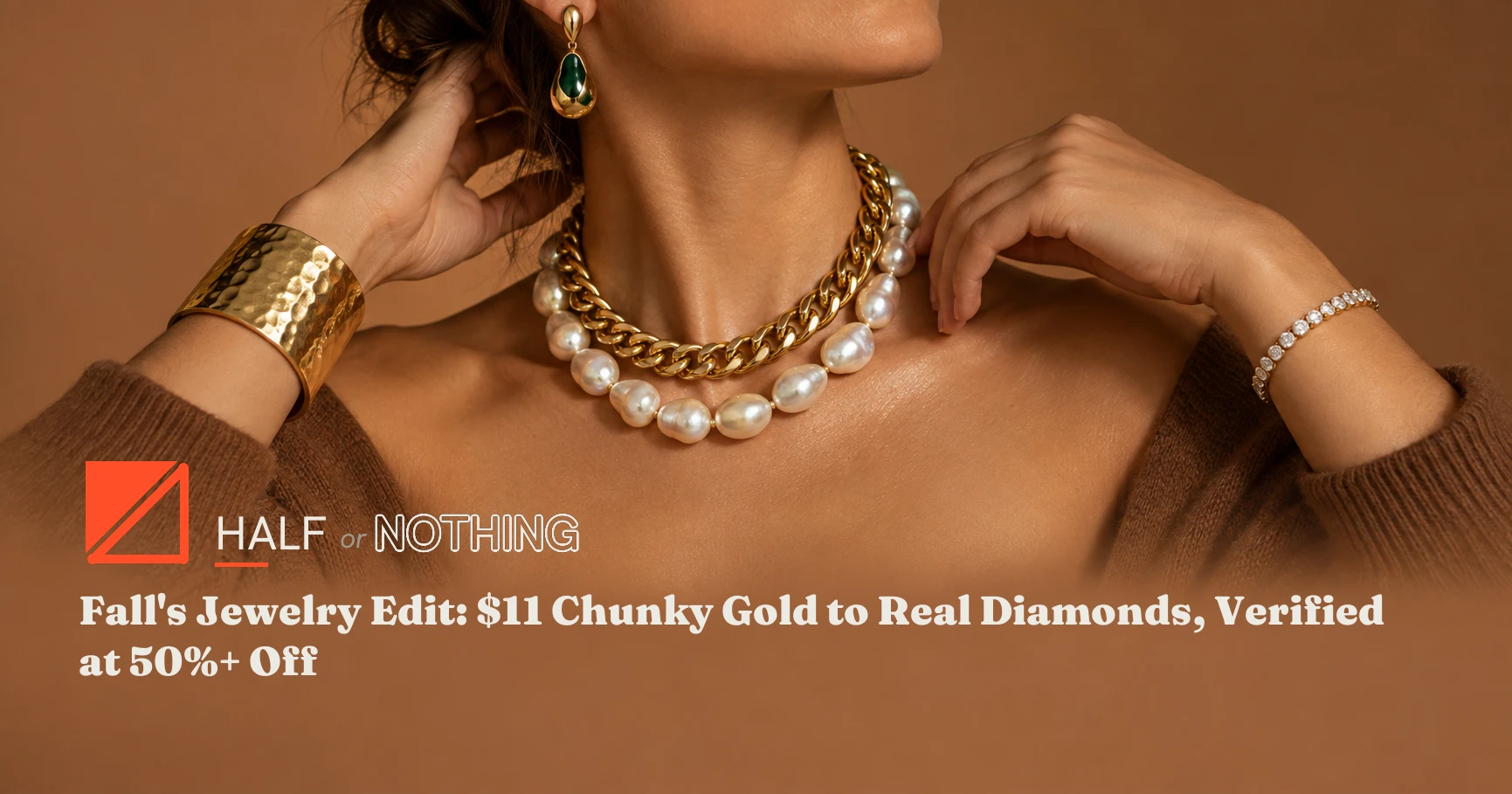
Most "50% off" badges on jewelry are math against a number the seller picked. That number might be the MSRP from a brand's website, a price the item was listed at for three days in 2023, or something a seller typed in because it made the discount look impressive. The actual price you'd find this piece at, if you searched across a dozen listings, is often much closer to what you're being asked to pay right now.
That's the problem with searching for half-price jewelry online. The discount percentage is easy to display. Verifying that the "original price" was ever real is the part most shoppers skip.
This guide covers the mechanics of that verification: how to check whether a jewelry discount is genuine, what return, warranty, and authenticity terms actually protect you, when outlet and resale pricing is a real deal versus a repackaged markup, and how to calculate what you're actually paying once shipping and fees are included. There's also a section on how Half or Nothing handles this filtering before a single listing reaches the page.
In This Article
Key Takeaways
The "was" price on jewelry is not regulated to reflect what the item actually sold for. Always check it against at least one other retailer or the brand's own site.
Jewelry listed at "50% off" on a brand's outlet page is often measured against the original full retail price, not the price the item has been selling at for months.
eBay's Authenticity Guarantee covers eligible fine jewelry, with GIA verification of metal purity and gemstone characteristics before the item ships. It does not verify appraisals or certificates included in the listing.
Shipping, insurance, and return costs can add $15 to $50+ to a jewelry purchase. A "60% off" piece with $30 shipping and a no-return policy may be a worse deal than a "45% off" piece with free shipping and 30-day returns.
Resale and pre-owned pricing is genuinely different from outlet pricing. The mechanisms that produce real discounts in each channel are not the same.
Half or Nothing checks every jewelry listing against the seller's listed original price before it reaches the page. Under 50% off does not make the cut, no exceptions.
How to Verify That a Jewelry Discount Is Real
A "50% off" badge is only worth something if the original price was real to begin with. Before anything goes on this page, we check the listed price against the brand's own site or a comparable major retailer, not just against a number the seller picked. You can do the same thing before you buy anywhere.
Step 1: Check the "was" price against a second source
The most common fake discount tactic in jewelry is inflating the reference price. A ring listed at "$89, was $180" might sell for $85 to $95 across every other listing for that same piece. The "was $180" exists to make the math look good, not because anyone ever paid $180 for it.
The fix is straightforward: search the exact product name or model number and see what it lists for elsewhere. Check the brand's own site, then at least one major retailer or marketplace. If the "original price" is above anything you find across a normal search, it's inflated.
What to look for specifically:
Does the "was" price appear on the brand's site right now, or did it disappear?
Is the "sale price" the same price this item has been listed at for the past several months?
Do multiple independent sellers list the same piece at roughly the same price, with no "discount" framing?
If the answer to that last question is yes, the "discount" is theater.
Step 2: Understand what the percentage is measured against
Jewelry discounts can be calculated against several different reference points, and the seller gets to choose which one they display. The FTC's Guides Against Deceptive Pricing require that a reference price reflect a price at which the item was actually offered to the public for a reasonably substantial period of time, but enforcement is complaint-driven and inconsistent in practice.
Here are the four reference points you'll encounter most often:
Reference Point
What It Means
How Reliable
Brand MSRP
Manufacturer's suggested retail price
Unreliable; brands set this high deliberately
Brand's own site "original price"
What the brand says it retails for
Verify it's not also "on sale" on the brand site
Comparable retailer price
What major retailers charge for the same piece
Most reliable anchor for real-world value
Seller's own prior listing price
What this seller charged before the "sale"
Only meaningful if the prior price was real
The most honest comparison is against what comparable retailers actually charge. If a piece is "50% off" the MSRP but every retailer sells it at 30% below MSRP as their normal price, the real discount is closer to 28%, not 50%.
Step 3: Look at the listing history, not just the listing
For marketplace listings on platforms like eBay, the seller's feedback history and listing age tell you something real. A seller who has listed this exact piece at "$180" for two years before suddenly marking it "50% off" is doing something different from a seller who listed it at $180 once and dropped it to $89 after three months of no bids.
Red flags specific to jewelry listings:
The "was" price only appears in the discount badge, nowhere else in the listing
The seller has no feedback on jewelry specifically, only on unrelated categories
The listing was created recently with a high "original price" already attached
The discount percentage is a round number (exactly 50%, 60%, 70%) on a piece with no obvious reason for that markdown
What Return, Warranty, and Authenticity Terms Actually Mean
The terms buried in a jewelry listing matter more than the discount percentage in one specific scenario: when the piece turns out to be not what it was described as. A 70% discount on a ring that arrives misrepresented and can't be returned is not a deal at all.
Return policy: what to check before you buy
Most jewelry platforms display a return window prominently, but the conditions matter as much as the number of days.
Questions to answer before purchasing:
Who pays return shipping? For a $200 piece, a $15 to $25 return shipping cost can erase most of the savings on a marginal deal.
Does the return window start from the purchase date or the delivery date? For jewelry shipped with authentication steps (see below), the delivery date is the right clock to use.
Is the return "no questions asked" or does it require the item to be "not as described"? The second condition requires you to document the discrepancy, which adds friction.
Are there restocking fees? Some jewelry sellers, particularly on marketplace platforms, charge 10 to 20% restocking fees on returns.
Authenticity guarantees: what they cover and what they don't
eBay's Authenticity Guarantee for jewelry is the most substantive third-party verification currently available on a major marketplace. Eligible pieces are shipped to jewelry experts at GIA, the Gemological Institute of America, for verification before delivery. Experts check metal type and purity, gemstone color, clarity, and carat weight within defined tolerances. The service is free to buyers on qualifying items.
What eBay's Authenticity Guarantee actually covers:
Diamond color grade within a 2-letter tolerance (e.g., a listed G may verify as H or I and still pass)
Diamond clarity grade within 1 grade tolerance (e.g., SI1 may verify as SI2 and still pass)
Carat weight within 10% for stones 0.40ct or larger
What it does not cover:
Appraisals or certificates included in the listing (these are not independently verified)
Laboratory-grown diamond color and clarity grades (only carat weight is checked)
Non-gem materials like glass, rhinestones, or synthetic stones
Assembled stones (stones made from two or more materials)
This is worth knowing because a listing that says "comes with a $3,000 appraisal" is not the same as a listing that passed Authenticity Guarantee. The appraisal is not checked. The metal and stone are.
Warranty: what it covers on discounted jewelry
Jewelry warranties from brands typically cover manufacturing defects, not normal wear or damage. On discounted pieces, the coverage is often the same as full-price, but verify two things:
1. Is the warranty honored on pieces purchased through third-party sellers or marketplaces, or only through authorized retailers? 2. Does "pre-owned" or "open box" condition affect the warranty start date or coverage period?
Some brands void warranties on pre-owned pieces entirely. Others honor them regardless of purchase channel. This is worth a 30-second check on the brand's site before buying a fine jewelry piece at any price.
Outlet, Clearance, Resale, and Marketplace Pricing: When It's Real
These four channels produce discounts through genuinely different mechanisms. Treating them the same is how shoppers end up paying "outlet prices" for something that was never more expensive.
Brand outlet and clearance
Outlet pricing on jewelry is real in the sense that the item is actually being sold below its original retail price. The catch is that "original retail price" is often the brand's MSRP, which was set high enough to make the outlet price look like a bargain while still delivering healthy margins.
When outlet pricing is actually a good deal:
The piece is being discontinued and the brand needs to clear inventory
The item was a seasonal design that didn't sell through at full price
The outlet price is below what comparable pieces sell for at non-outlet retailers
When it isn't:
The brand operates a permanent outlet section where "sale" is the standard price
The "original" price is the MSRP, not a price the item was ever widely sold at
The same piece appears in both the regular and outlet sections of the brand's site at different prices
A useful check: search the piece's model number across non-outlet retailers. If every retailer sells it at roughly the outlet price, the outlet isn't discounting anything.
Resale and pre-owned
Pre-owned jewelry is where real half-price deals are most consistently available, and where the verification work matters most. The discount is real because the piece has changed hands, not because a seller inflated a reference price. A 14K gold bracelet that retailed for $600 and is listed pre-owned at $280 is genuinely less expensive, not a manufactured markdown.
The real question in resale isn't whether the discount is real. It's whether the piece is what the listing says it is.
For pre-owned fine jewelry, this means checking:
Condition honestly described? "Excellent" and "good" mean different things. Look for photos of clasps, prong settings, and any engraving.
Metal hallmarks verifiable from photos? A 14K piece should show a hallmark stamp. If photos don't show it, ask.
Stone quality described specifically? Vague descriptions like "sparkling diamond" without carat weight or clarity grade are a signal to ask questions before buying.
Third-party marketplace listings
Marketplace listings from individual sellers (not brand-authorized retailers) produce discounts through a different mechanism again: the seller acquired the piece at a lower cost and is pricing it to move, or is a private individual selling something they no longer want.
The pricing on these listings is not measured against any official retail price. The "was" price, if one appears, is what the seller decided to show. This is where the price verification steps in the first section of this guide matter most.
The honest summary by channel:
Channel
Why Discounts Exist
Biggest Risk
Brand outlet
Clearance, discontinuation, seasonal
MSRP inflation makes % look bigger than it is
Brand clearance sale
End-of-season inventory
Often temporary; same piece returns at full price
Pre-owned / resale
Genuine secondary market pricing
Condition and authenticity need independent verification
Marketplace (individual sellers)
Seller sets price; no official anchor
"Was" price is self-reported and unverified
Verified Fine Jewelry, Live on Half or Nothing Right Now
Every piece below is currently listed at 50% off or more against the seller's own original price, and every listing carries eBay's Authenticity Guarantee, meaning it ships to GIA for verification before it reaches the buyer, not something we're taking the seller's word for.
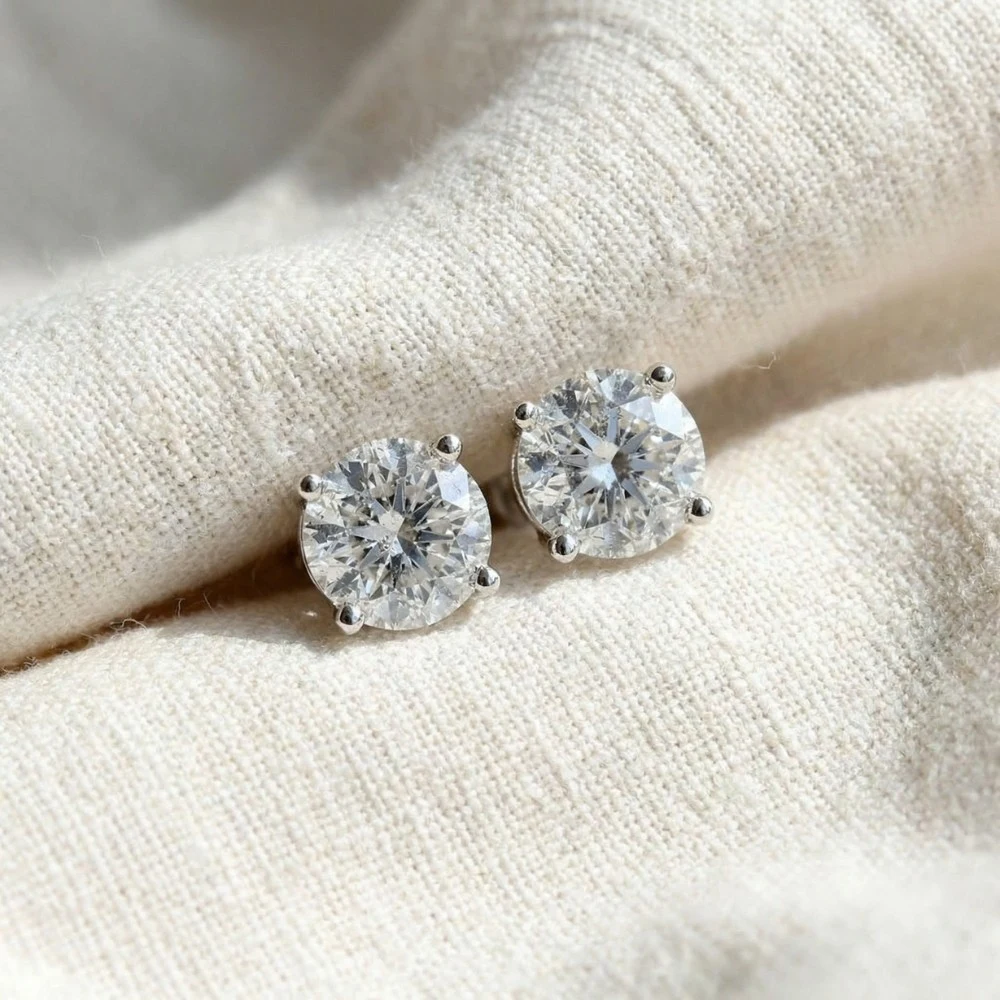
Diamond stud earrings on beige fabric
1/4-2 Ct T.W. Natural Diamond Studs, 14K White or Yellow Gold -- $111.10, list price $261.34 (57% off), Authenticity Guarantee. Buy on eBay →
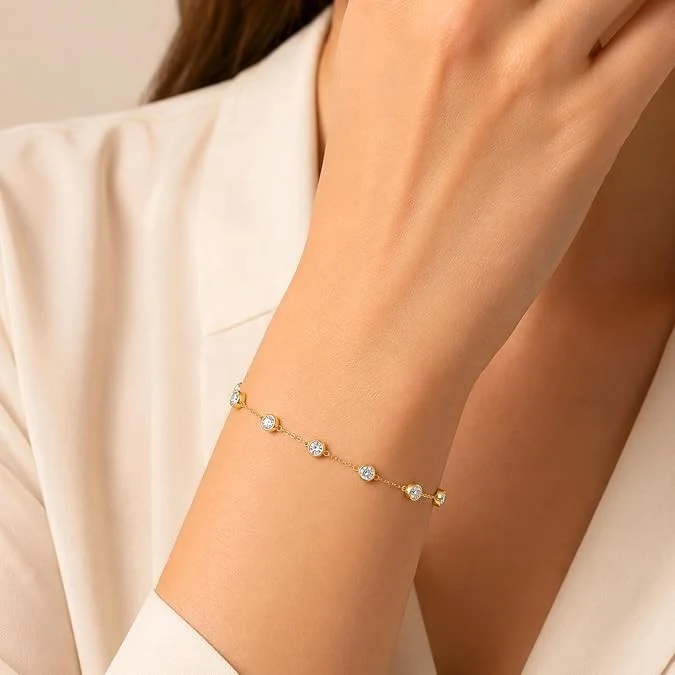
Lab-grown diamond station bracelet worn on a wrist
14K Yellow Gold Lab-Grown Diamond Station Bracelet, 1/4 Ct, E-F, VS -- $516.00, list price $1,289.99 (60% off), Authenticity Guarantee. Buy on eBay →
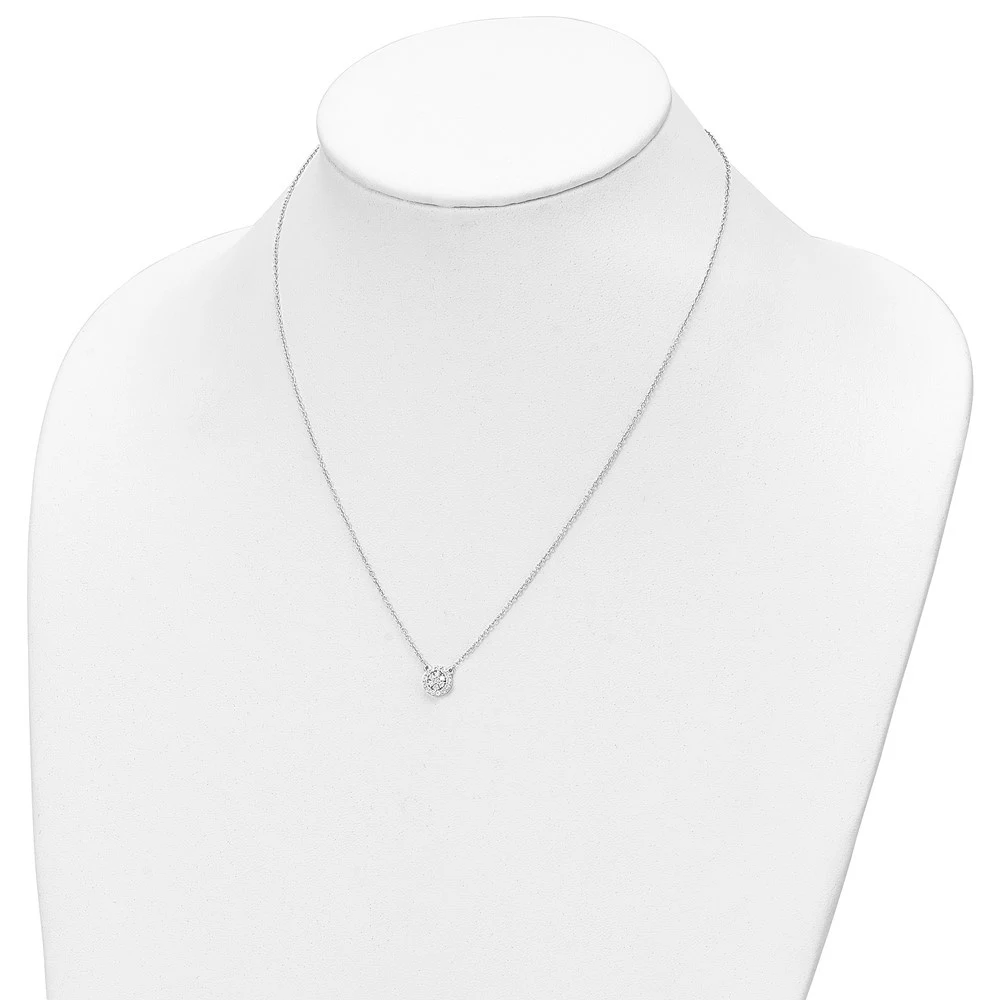
Diamond halo pendant necklace worn on a mannequin bust
14K White Gold 1/5 Carat Diamond Halo Cluster Pendant Necklace, 18" -- $1,152.00, list price $2,879.99 (60% off), Authenticity Guarantee. Buy on eBay →
How to Compare Total Cost, Not Just the Percentage Off
The advertised discount is the starting point, not the final answer. Jewelry has more cost variables than most product categories, and the gap between "60% off" and what you actually pay can be significant.
The components of total cost
Before comparing two listings, add up these numbers:
1. Sale price: the number in the listing. 2. Shipping: free is not universal on jewelry, and expedited or insured shipping adds cost. 3. Insurance: for pieces over $200, shipping insurance is worth having. Some sellers include it, others don't. 4. Return shipping if needed: who pays, and how much. 5. Any platform fees: rare for buyers, but some international purchases carry currency conversion or import fees.
A worked example:
Listing A
Listing B
Advertised discount
60% off
48% off
Sale price
$119
$138
Shipping
$22, insured
Free, insured
Return policy
Buyer pays return, about $18
Free returns
Total if kept
$141
$138
Total if returned
$159
$138
Listing A has the bigger badge. Listing B is the better deal in every scenario.
Why jewelry shipping costs are higher than average
Jewelry is small and high-value, which means sellers have legitimate reasons to ship it with insurance and signature confirmation. The cost of that protection gets passed to the buyer in many listings. A $30 ring with $12 insured shipping is a different calculation than a $30 ring with free shipping.
What to look for:
"Free shipping" on fine jewelry often means the seller has built shipping into the price. That's fine, but compare the total against listings where shipping is itemized separately.
Signature confirmation is standard on eBay's Authenticity Guarantee shipments for verified jewelry. That helps protect higher-value pieces, but it also means someone needs to be available to receive the package.
International listings may show a low price with high shipping. Always click through to see the full landed cost before comparing.
The return cost is part of the deal math
A no-return policy on jewelry is a meaningful risk, not just a minor inconvenience. Jewelry is one of the product categories most likely to look different in person than in listing photos, because lighting, camera settings, and photo editing can make a piece appear brighter, larger, or more detailed than it is.
Before buying: calculate whether you can absorb the full cost of the piece if returns aren't available. If not, factor in whether the return terms are good enough to make the risk acceptable.
How Half or Nothing Filters Jewelry Deals
The whole point of this site is to remove the verification work described above from your side of the equation. Here's exactly what happens before a jewelry listing reaches the page.
The 50% rule is not a guideline
Every listing on Half or Nothing clears a hard 50% off minimum before it's displayed. That percentage is calculated against the seller's listed original price, not against an MSRP we found somewhere, not against a price we think sounds reasonable. If the seller says the item was $200 and lists it at $100, that's a 50% discount and it qualifies. If they say it was $200 and list it at $101, it doesn't make the page.
This is a different standard from sites that display "up to 50% off" or "deals starting at 50% off." Those phrases describe the ceiling or floor of a range. Our rule applies to every single listing, individually.
What we check and what we don't
We're transparent about what this filter does and doesn't do, because overstating it would be its own form of fake discount.
What the filter does:
Verifies the discount percentage against the seller's stated original price
Refreshes every hour, so listings that have been repriced upward (reducing the real discount) drop off the page
Sorts by discount percentage, highest first, so the deepest cuts are always at the top
What it doesn't do:
We don't independently verify that the seller's stated original price was ever the real market price for that piece. Neither number is more "official" than the other. Ours is against the highest price the seller listed. A cross-check against the brand's site or a major retailer is still worth doing on higher-value pieces.
We don't verify condition on pre-owned pieces beyond what the seller has listed.
We don't verify authenticity independently. For fine jewelry on eBay, the Authenticity Guarantee program handles that, as shown on each of the three pieces above.
Where to browse verified jewelry deals
Right now there are hundreds of live jewelry listings on Half or Nothing that have cleared the 50% threshold. The main jewelry category covers bracelets, earrings, necklaces, rings, watches, and loose stones, all sorted by discount percentage so the deepest cuts are always first.
All listings link directly to the seller on eBay. We don't host inventory or handle transactions. The affiliate disclosure is on every page: commission never affects which deals are listed or what order they appear in.
Frequently Asked Questions
Is a jewelry "outlet" price the same as a real discount?
No. Outlet pricing is calculated against the brand's original retail price, which is often higher than the price the piece actually sold at across most retailers. The discount percentage is real in the sense that the outlet price is lower than the MSRP, but if every retailer was already selling the piece at 20 to 30% below MSRP as their normal price, the outlet discount is smaller than the badge suggests. Check the outlet price against what non-outlet retailers charge for the same piece before assuming the markdown is as deep as advertised.
What does eBay's Authenticity Guarantee actually verify on jewelry?
For eligible pieces, GIA experts verify metal type and purity, diamond color grade (within a 2-letter tolerance), diamond clarity grade (within 1 grade), and carat weight (within 10% for stones 0.40ct or larger). It does not verify appraisals or certificates included in the listing, laboratory-grown diamond color and clarity, or non-gem materials. The blue checkmark badge in a listing confirms the piece passed this inspection before shipping to the buyer.
How do I know if the "was" price on a jewelry listing is real?
Search the exact product name or model number across the brand's site and at least one major retailer. If the "was" price is higher than what you find anywhere else, it was inflated. Also check whether the seller's discount badge shows a round number (exactly 50%, 60%, 70%) with no obvious reason for that specific markdown, which is a common signal of a manufactured reference price.
Does free shipping on jewelry mean I'm actually getting a better deal?
Not necessarily. Sellers who offer free shipping on jewelry often build the shipping cost into the listed price. The more useful comparison is total landed cost: sale price plus shipping, compared across listings. A piece with free shipping at $150 may cost the same as a piece listed at $130 with $20 insured shipping, and the second listing may actually offer better coverage during transit.
What's the safest way to buy pre-owned fine jewelry online?
Buy from sellers with substantial feedback specifically on jewelry (not just general merchandise), verify that listing photos show hallmark stamps on metal, check that gemstone descriptions include specific carat weight and clarity grade rather than vague language, and use a platform with buyer protection. Pieces with the Authenticity Guarantee badge have been physically inspected by GIA before shipping. For pieces below that threshold, seller feedback and return policy terms are your main protections.
How does Half or Nothing filter jewelry deals?
Every jewelry listing on Half or Nothing has cleared a hard 50% off minimum, calculated against the seller's stated original price. Listings refresh hourly, so pieces that have been repriced upward drop off the page automatically. All listings are sorted by discount percentage, highest first. The site doesn't independently verify seller-stated original prices against the broader market, so a cross-check against the brand's site is still worth doing on higher-value pieces. Browse live jewelry deals here.
Half or Nothing is an affiliate of eBay. We earn a commission when you buy through links on this page. Commission never affects which deals are listed or what order they appear in.How we verify dealsexplains our methodology in full. Browse livejewelry and watch deals at 50% off or more.
Every pick we've pulled at 50% off or more, in one place.
Right now there are 7,807 live clothing deals on Half or Nothing at 50% off or more, averaging 71.4% off. Here's where that inventory actually comes from, and what to check before you buy.
Which marketplaces genuinely produce 50%+ electronics discounts, how to vet a seller, what open-box and refurbished labels really mean, and how fulfillment works when you buy.