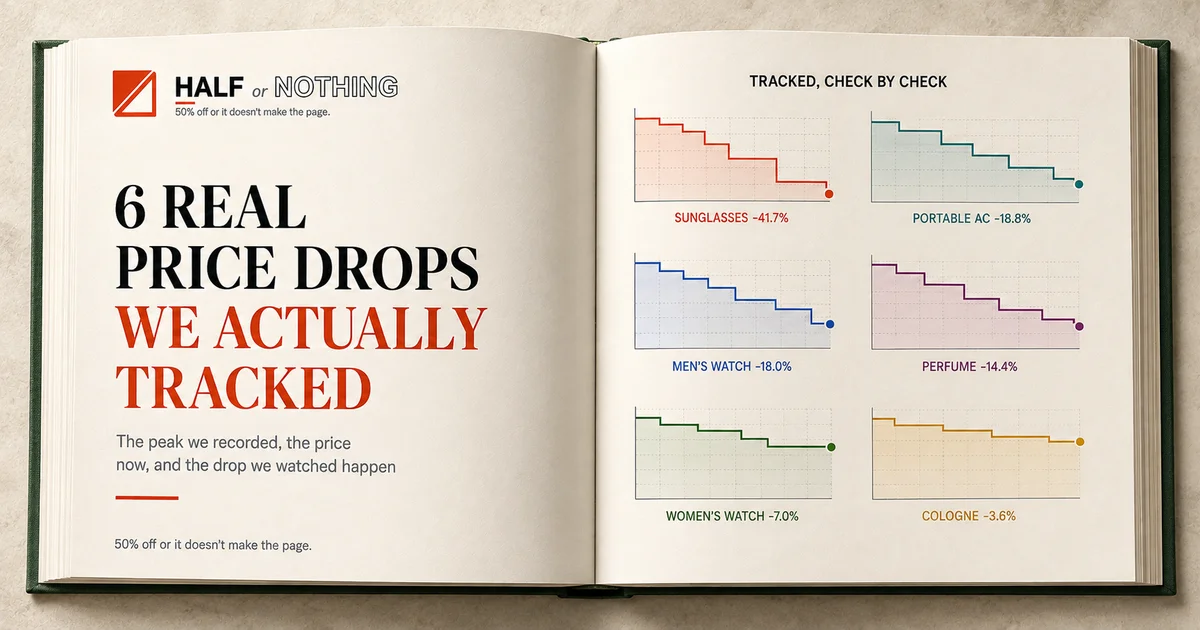
6 Real Price Drops We Actually Tracked
Six listings where our own price history shows the price genuinely moved, with the real drop we measured next to the discount the seller claims.
2026-08-24
Half or Nothing
50% off or it doesn't make the page.
2026-08-24 · Written by Dann Nazario · 4 min read
“50% off” is one of the easiest numbers in retail to fake. Not because the math is wrong. The number it's measured against is the part nobody checks.
Every listing on this page has to clear one bar: the current price has to be 50% or less than the listed original price, full stop. Anything under that never makes it onto the page. That's the whole filter. It's math, not a judgment call, and it's not something a commission can influence.
But here's the part worth being upfront about: that filter checks the seller's stated original price against the current price. It doesn't independently verify that the original price was ever a real, meaningful market price. Nobody's system does that automatically, including the big retailers.
Retailers aren't required to have ever sold something at the “original” price they show next to a sale price. A “compare at” or “MSRP” price is often set by the manufacturer or the retailer specifically to be crossed out, inflated ahead of time so the sale price looks bigger than it is. This is common enough that it has a name in retail pricing: reference pricing, and it works because your brain anchors to the first number it sees, not the second one.
On a marketplace like eBay, the “was” price on a listing is whatever the individual seller enters. Sometimes it's the brand's real MSRP, sometimes it's inflated well past what the item ever sold for anywhere.
The scanner's job is the math. Confirming the number means something is on you, and it takes two minutes:
The 50%+ rule on this page is real, verified math. That part isn't in question. What it can't do is vouch for a number a third-party seller typed in. Do the two-minute check above on anything you're about to spend real money on, especially the bigger-ticket items. For the deeper dive into what our own price-history tracking can and can't confirm, see what our price tracking actually proves, and for six real cases where we watched a price move over weeks, see 6 real price drops we actually tracked.
No, and that's stated plainly on this page: the filter checks the current price against the seller's stated original price, but it doesn't independently verify that the original price was ever a real, meaningful market price. No system, including the big retailers, does that automatically.
Just the math: the current price has to be 50% or less than the listed original price. That part is verified and consistent. What it can't confirm is whether a third-party seller's "before" price was ever a real charge.
Three ways: check eBay's own "sold" listings for the same item to see what people actually paid, search the brand's own site for the current price if it's name-brand, or use a price-history tool like Keepa for Amazon items to see if the price was ever really charged.
Because of reference pricing: retailers set a "compare at" or MSRP price specifically to be crossed out, inflated ahead of time so the sale price looks bigger than it is. It works because your brain anchors to the first number it sees.
Whatever the individual seller enters. Sometimes it's the brand's real MSRP, sometimes it's inflated well past what the item ever sold for anywhere.
Browse today's deals, or read how this page is built and paid for.
Some links on this page are affiliate links, see how this page is built and paid for for how that works. It doesn't change what makes the page or in what order.
Every pick we've pulled at 50% off or more, in one place.
Visit our Amazon store ›Six listings where our own price history shows the price genuinely moved, with the real drop we measured next to the discount the seller claims.
2026-08-24
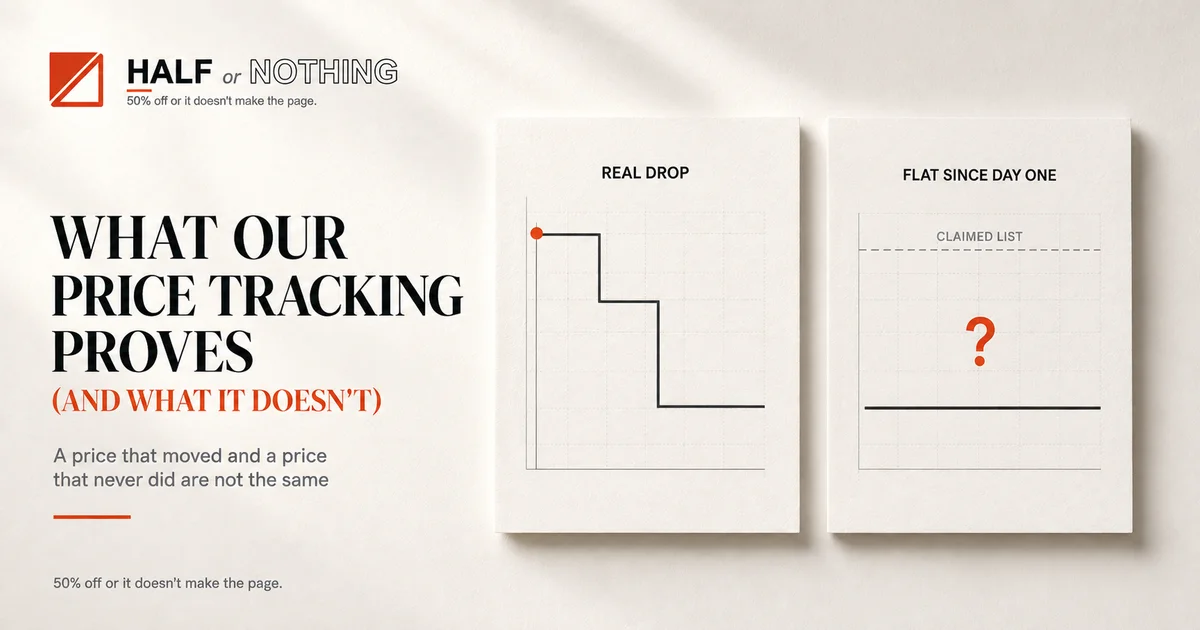
A real pattern our own price history can't verify one way or the other, and why I'm telling you instead of quietly hiding it.
2026-08-24
How to verify a jewelry discount is real, what return and authenticity terms actually protect you, and when outlet, resale, and marketplace pricing is genuine versus repackaged markup.
2026-09-15